Recent Posts
Most Popular





How physicians and APPs can build a portfolio career

What is a portfolio career?
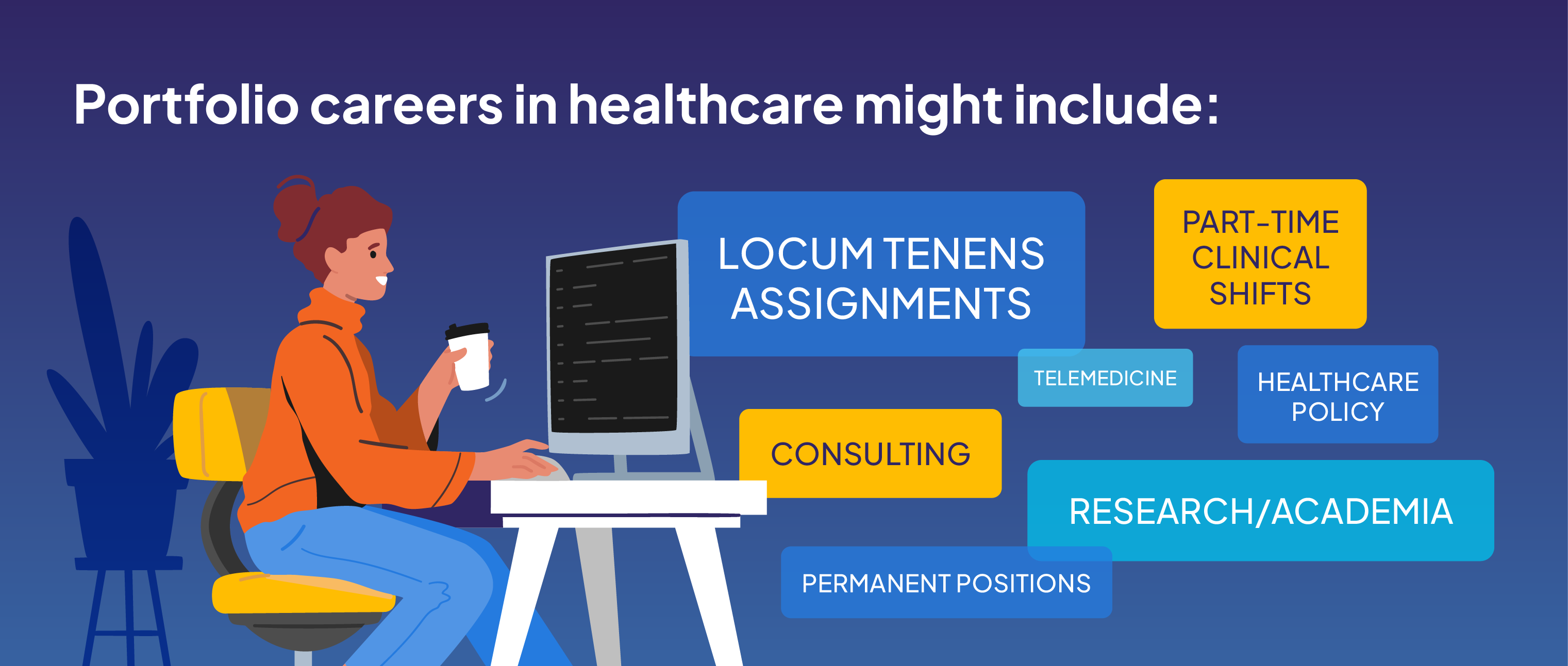
A portfolio career means combining multiple roles, responsibilities and revenue streams into a dynamic, personalized professional path. For physicians and advanced practice providers (APPs), this might include a mix of permanent, part-time, telehealth, locum tenens and consulting opportunities.
This approach to career design is gaining momentum across the healthcare job market, driven by more flexible technologies, shifting work expectations, burnout prevention, and the growing desire to align professional goals with personal priorities such as family, travel and passion projects. For many clinicians, the goal of a portfolio career is to better balance career satisfaction, income and quality of life.
If you’re considering reinventing the way you practice, building a portfolio career strategy can offer greater control along with additional income streams. Below, I’ll walk through how to make this approach work for you, what to plan for and how to optimize your search.
Building a portfolio career step-by-step
Here are actionable strategies you can use leveraging sites like DocCafe to build a portfolio career that fits your needs.
1. Clarify your goals and priorities
- Define your non-negotiables: hours, specialty, geography (local or remote), schedule flexibility and compensation minimums, to name a few.
- Decide how many “roles” you want (e.g. one permanent clinical job + part-time telehealth work + occasional consulting).
- Use filters to identify roles that match each stream: telehealth-only, locum or temporary roles, part-time positions, academic positions, etc.
2. Find the right partners
- If you are interested in locum tenens work, connect with a reputable staffing agency, like Aya Locums, to handle credentialing, licensing, and transportation and housing logistics.
- Consult a tax professional who understands self-employment deductions and quarterly payments.
- Use a financial advisor to help plan for retirement or sabbaticals.
- Engage with career coach, mentor or peer network for ongoing guidance and support.
3. Leverage tools for flexibility and variety
- Set up job alerts for multiple categories (e.g. “locum”, “telehealth”, “part-time clinical”, “consulting / non-clinical”) so you don’t miss opportunities in different streams.
- Use search filters to also compare pay, shift types, required licensure and contract terms for different types of roles.
- Maintain multiple saved searches or portfolios so you can track roles in different streams concurrently.
4. Plan for variability and financial stability
- Recognize that non-traditional roles often mean variable income, occasional gaps between assignments and different benefit packages.
- Budget accordingly for slow periods. Think ahead about malpractice, licensure, travel/housing, tax implications, etc.
- Compare compensation data across types (locum vs. permanent vs. telehealth), so you know what to expect.
5. Build and promote versatile credentials
- Make your CV flexible: highlight not just clinical work, but telehealth experience, consulting, teaching, research, leadership and more.
- Keep your state licenses/credentials up to date — especially if considering hybrid or telemedicine roles across states.
- Maintain an online presence (LinkedIn, personal website, etc.) that reflects your portfolio ambitions. Let recruiters and employers see that you’re adaptable and interested in varied opportunities.
6. Stay agile and reassess regularly
- Periodically re-evaluate your mix of roles: are you overextended? Are certain roles more draining than rewarding?
- Be open to adjusting — maybe drop one stream that isn’t working and lean into another that is more satisfying.
- Use job board metrics (how many roles applied for, offers received in each category, rate of acceptance, etc.) to assess which role types are most viable for you.
Addressing challenges
While a portfolio career offers flexibility and autonomy, it might also require more intentional planning than a traditional single-employer role. The good news? Most of the common challenges can be mitigated with the right strategies, tools and support.
Income variability: Because portfolio careers generally rely on multiple revenue streams, earnings may fluctuate. Consult with a financial planner for additional advice.
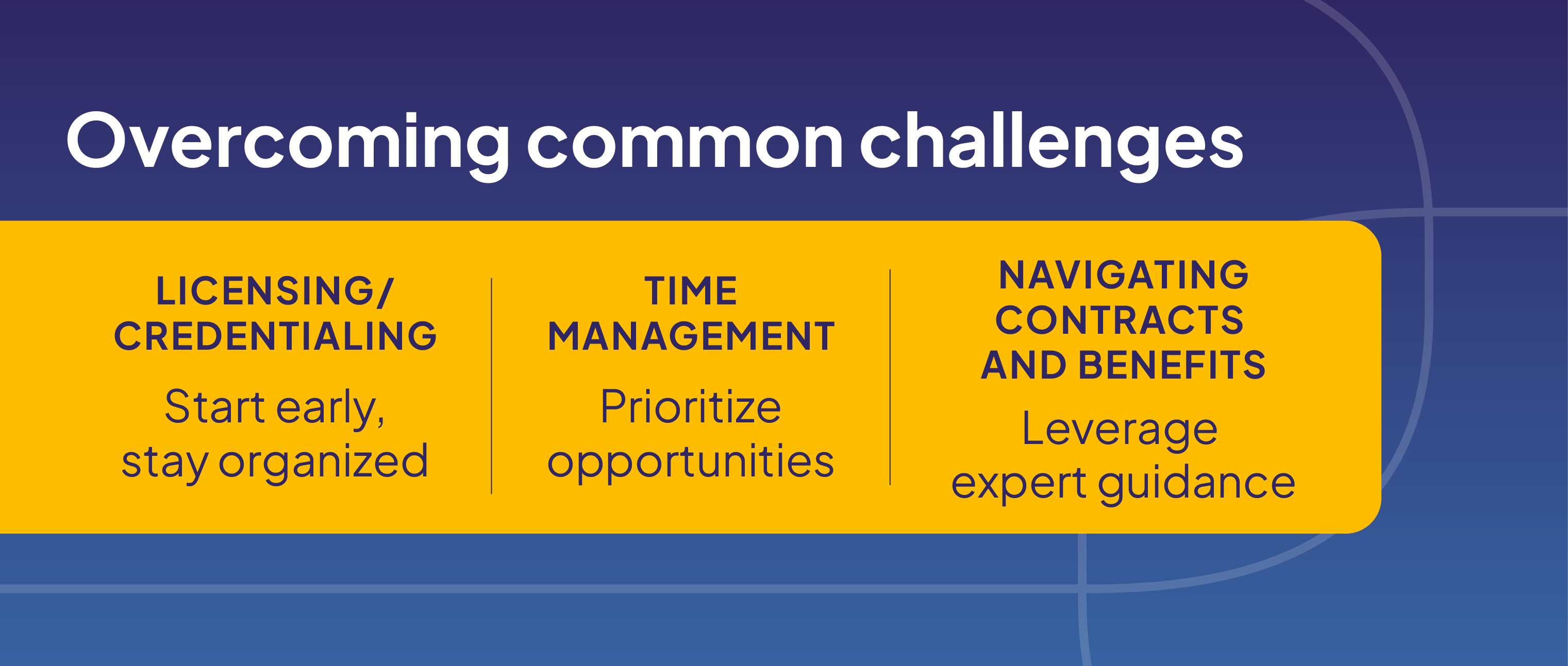
Licensing, credentialing and compliance: While managing these can feel complex, starting the process early, tracking renewal dates and using job boards that surface multi-state opportunities can reduce friction. Many clinicians also choose to work with reputable locum tenens agencies that provide guidance and administrative support.
Time management: The key here is not to do more, but to do what matters most. Limit the number of active roles, protect personal time and prioritize opportunities aligned with your interests and long-term goals to help sustain both performance and well-being.
Contract complexity and decision fatigue: Find clarity here by using job board resources, asking detailed questions and carefully comparing contract terms. When needed, consult with career advisors or legal professionals to ensure your portfolio is structured to support both your professional and personal objectives.
A portfolio career is all about designing a system that gives you flexibility, resilience and control. With thoughtful planning, the right resources and trusted partners, clinicians can turn potential challenges into strategic advantages.
Next steps
If you’re ready to begin or enhance your portfolio career, I encourage you to:
- Register for or log in to your DocCafe account and set up role alerts in at least three of the streams mentioned above.
- Update your resume and profile to highlight versatility (clinical, non-clinical, telehealth etc.).
- Browse and compare pay and contract terms across different types of roles — so you know what is fair and competitive.
- Reach out to one trusted peer or mentor to help review opportunities and strategy — having someone outside yourself view your plan often reveals things you miss.
Designing a portfolio career isn’t just about having more jobs — it’s about aligning your work with what matters most to you: autonomy, variety, financial security and satisfaction. As the job market shifts, DocCafe can help you explore all these pathways so you can build a portfolio that fits you.
Frequently Asked Questions (FAQs)
Q: What can I expect in terms of compensation or benefits in locum tenens or telehealth roles?
A: Compensation for locum tenens or telehealth roles can be very competitive — especially in high-demand specialties or underserved areas where your expertise is needed most. Benefits can vary by assignment and agency, so it’s a good idea to review contract details to understand exactly what’s included and choose the opportunities that best fit your needs.
Q: How many different employment types should I try at once?
A: It’s personal. Many providers start with two streams (e.g. one permanent clinical + telehealth or locum) as a test. Once you see which are rewarding and sustainable, you can phase in or reduce others.
Q: Can I do portfolio work if I have clinical privileges or a full-time clinical job?
A: Yes — many providers do. Just make sure your contract allows outside work, manage scheduling carefully, keep credentials active and avoid conflicts of interest. Job boards often list roles with flexible schedules or moonlighting options.
All information, discussions and opinions contained within this blog or otherwise on the website or any linked materials (the “Blog Content”) is for general informational purposes only. All Blog Content is based on the author's opinions and experiences and is not necessarily representative of our opinions as an organization. It should not be considered as tax/financial advice, legal advice, compliance advice, health advice or other professional advice and does not constitute the practice of any medical, nursing or other professional healthcare advice, diagnosis or treatment or provision of legal services. You should seek professional assistance for any concerns or issues. If you or any other person has a medical concern, you should consult with your healthcare provider or seek other professional medical treatment immediately. While we strive to provide accurate and up-to-date information, we make no warranties or representations regarding the completeness, reliability, or accuracy of the Blog Content. Your use of the Blog Content is solely at your own risk and we will not be liable for any damages or losses arising from the use of, or reliance on, any Blog Content.


Comments