Recent Posts
Most Popular





Differences between permanent and locum tenens jobs: Choosing the right fit

Summary
- Discover the key differences between permanent physician/APP roles and locum tenens opportunities.
- Understand the logistics of licensing, credentialing and agency support for each path.
- See how blending permanent and locum work can create the best of both worlds.
Choosing the right role is one of the most important decisions you’ll make in your medical career. Physicians and advanced practice providers (APPs) are often presented with the unique opportunity to pursue permanent positions or explore locum tenens roles.
Each option has distinct benefits and trade-offs. Permanent jobs provide stability and opportunities for long-term career development, while locum tenens offers flexibility and variety.
In addition to full-time positions, DocCafe also offers locum tenens roles. To help you find the right fit for your next career move, I’ve broken down how these different models compare — and how they can even complement each other throughout your career journey.
Advantages of working permanent roles
1. Stability and security
Permanent roles provide consistent income and benefits, such as health insurance, retirement contributions, malpractice coverage and CME allowances. This predictability allows you to plan for long-term financial goals and build a sense of security for yourself and your family.
2. Community and continuity
Permanent positions give providers the opportunity to build strong patient relationships and integrate into the culture of a practice or hospital system. Continuity of care often leads to deeper connections and long-term professional fulfillment.
3. Career advancement
These roles often come with pathways for leadership positions, mentorship opportunities and committee work. You might also have a greater influence in shaping institutional policies or practice standards.
4. Lifestyle considerations
While permanent roles typically come with structured schedules and set PTO, many providers appreciate the stability and routine. This predictability is especially valuable for those with families or community commitments.
5. Considerations
Permanent jobs can mean less flexibility and more administrative responsibility — a factor that permanent employees often feel more acutely.

In short, permanent roles typically provide consistent income, benefits and career growth, making them ideal for those seeking stability.
Start searching for your next permanent role.
The perks of a locum tenens career
1. Flexibility
Locum tenens allows providers to choose when, where and how often they work. This is especially appealing for those who want to travel, take extended breaks between assignments or supplement income outside of a permanent job.
2. Compensation
Locum assignments often come with competitive daily or hourly rates. Many include paid housing, travel reimbursement and malpractice coverage, which can increase overall earning potential in the short term.
3. Clinical variety
From rural clinics to large urban hospitals, locum tenens provides exposure to diverse patient populations and healthcare systems. This variety can help providers sharpen skills, avoid monotony and gain experience in settings they may not encounter in a single permanent role.
4. Career transitions
Locum roles can be a great option if you’re between jobs, easing into retirement, or exploring different geographic areas or practice settings. They can also serve as a ‘trial run’ before committing to a new long-term role.
5. Considerations
Reputable staffing agencies typically handle licensing, credentialing, travel and lodging, which makes the process much smoother. This support allows physicians and APPs to focus on patient care instead of paperwork. However, as locums are typically considered contractors, they usually aren’t eligible for benefits through the employer, such as health insurance, retirement plans, CME allowances and paid time off.
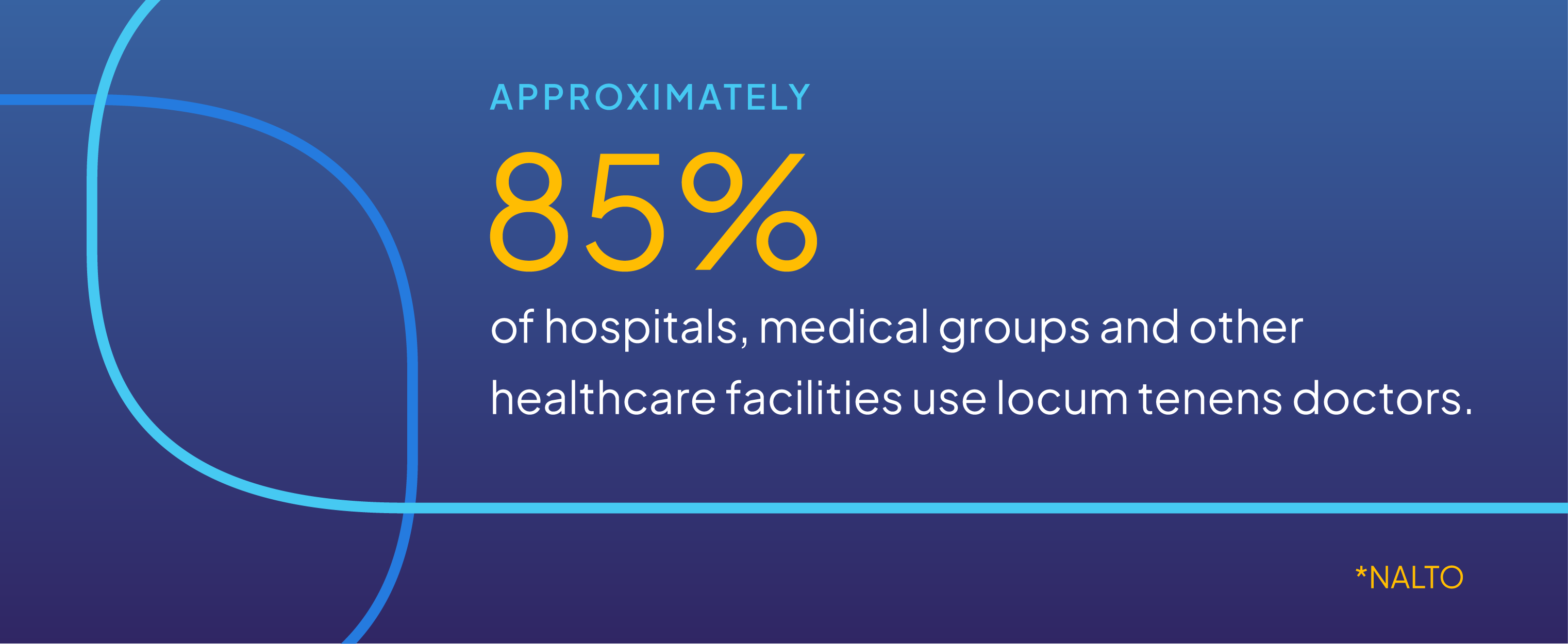
Overall, locum tenens roles offer flexibility, competitive pay and diverse experiences, making them well-suited alternatives for those seeking variety and control over their career.
Learn more about working locum tenens.
Career development: Different paths, same goals
Permanent jobs and locum tenens both support career growth, but in different ways:
- Permanent roles allow providers to climb leadership ladders, shape institutional policies and pursue tenure-track or academic opportunities.
- Locum tenens enables exploration — whether it’s transitioning into a new specialty, bridging employment gaps or easing into retirement while still practicing.
Blending permanent and locum work
You don’t have to choose just one path. Many physicians and APPs blend permanent employment with locum tenens assignments. Common approaches include:
- Working a 1 week on / 1 week off schedule in a permanent role and filling off weeks with locum assignments.
- Using vacation or PTO to take short-term assignments.
- Accepting locum jobs close to home to supplement income without significant travel.
This hybrid model allows providers to enjoy the stability of a permanent role while maintaining the flexibility and earning potential of locum work.
Opportunities to transition between roles
It’s important to note that choosing one path doesn’t lock you in forever. Many providers move between locum and permanent work throughout their careers.
- Locum-to-perm: While short-term coverage (like maternity leave) might not lead to permanent offers, long-term assignments frequently do. In some cases, a locum assignment can act as a ‘working interview.’ Facilities sometimes bring on locum providers while searching for a permanent hire, which creates natural opportunities to transition if there’s mutual interest. Typically, in these situations, compensation and benefits are negotiated directly between the provider and facility, with the agency supporting a smooth transition.
- Perm-to-locum: Others transition to locums after years in a permanent job to regain flexibility, explore new environments or adjust their workload in later stages of their career.
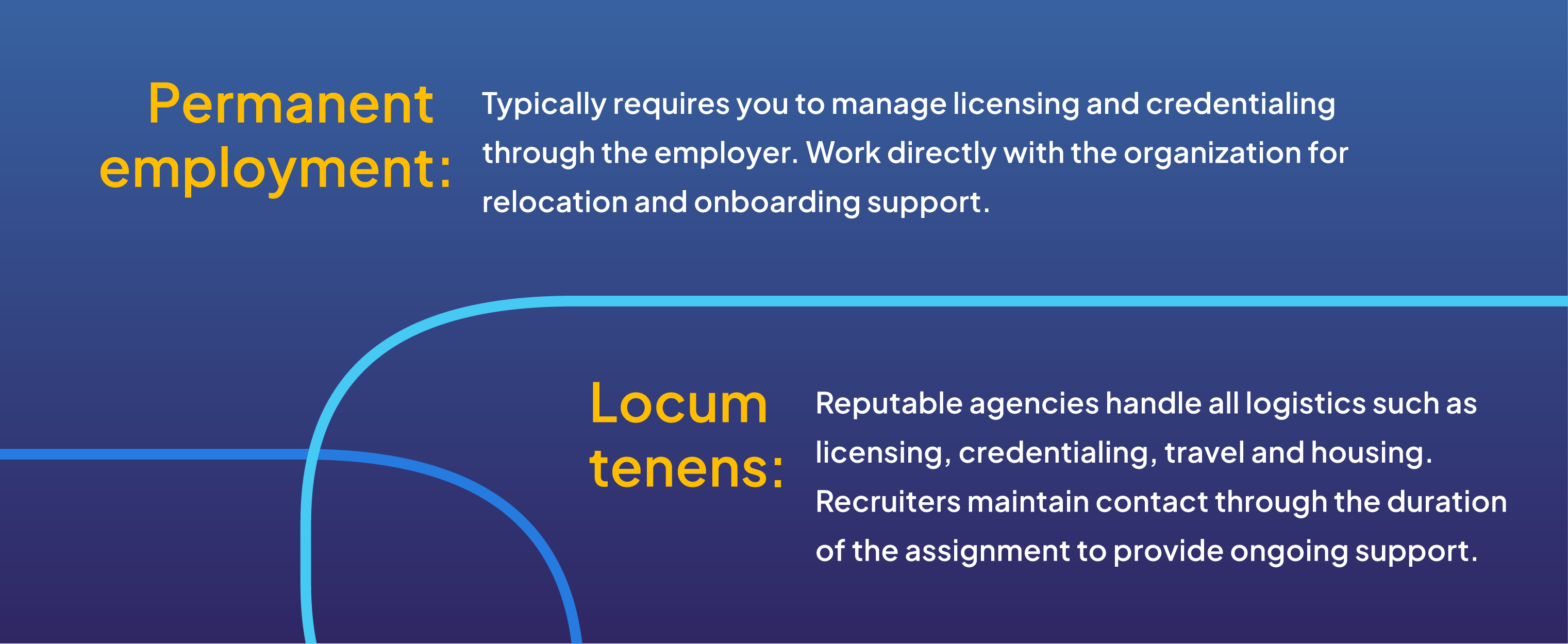
In either direction, both options can complement one another depending on your professional and personal needs and goals at any given time.
Key takeaways
Permanent and locum tenens roles are both rewarding career paths for physicians and APPs. Permanent positions provide stability, continuity and growth opportunities, while locum tenens offers freedom, variety and flexibility. The best choice depends on your current goals, lifestyle preferences and long-term vision. And the good news is you don’t have to choose just one.
Many providers rely on DocCafe to help them alternate between the two, to find the perfect balance of stability and freedom. Check out our wide range of job listings, including full-time, locum tenens and telehealth roles. For even more locum tenens opportunities, or to start working directly with a dedicated recruiter, visit our partners at Aya Locums.
Permanent and locum tenens jobs FAQs
1. Can I switch from a permanent job to locum tenens work?
Yes. Many physicians and APPs transition to locum roles after years in a permanent job to reduce administrative tasks, explore new practice settings or adjust their schedules.
2. Do locum tenens roles provide benefits like health insurance or retirement contributions?
Typically, no. While agencies cover malpractice insurance, housing and travel, benefits like health insurance or retirement plans are generally only offered for full-time permanent roles.
3. How long are locum tenens assignments?
Assignments vary widely — from a few weeks to several months. Some may extend if both the provider and facility are happy with the arrangement.
4. How much experience do I need to take a locum role?
The requirements for locum jobs are determined by the facilities and can vary. While some might accept new graduates, most typically require at least 1 - 2 years of prior practical experience to ensure providers can adapt quickly to new environments.
5. Can a locum tenens role turn into a permanent position?
Yes. Many providers use locum assignments to ‘test drive’ a job. If the fit feels right, it’s common to transition into a permanent role with that facility.
All information, discussions and opinions contained within this blog or otherwise on the website or any linked materials (the “Blog Content”) is for general informational purposes only. All Blog Content is based on the author's opinions and experiences and is not necessarily representative of our opinions as an organization. It should not be considered as tax/financial advice, legal advice, compliance advice, health advice or other professional advice and does not constitute the practice of any medical, nursing or other professional healthcare advice, diagnosis or treatment or provision of legal services. You should seek professional assistance for any concerns or issues. If you or any other person has a medical concern, you should consult with your healthcare provider or seek other professional medical treatment immediately. While we strive to provide accurate and up-to-date information, we make no warranties or representations regarding the completeness, reliability, or accuracy of the Blog Content. Your use of the Blog Content is solely at your own risk and we will not be liable for any damages or losses arising from the use of, or reliance on, any Blog Content.


Comments